Home › Sitework and Structural Concrete
Get dependable structural concrete in Austin, TX for the backbone of your commercial projects. We install footings, walls, piers, pedestals, and equipment pads that meet engineering specs. Our team coordinates with other trades and maintains quality control from forming through curing.
Superior Concrete Austin provides professional structural concrete throughout Austin, TX, Texas and the surrounding area. Our licensed, insured crew delivers safe, clean, on-time work with a free estimate before anything begins. Call (737) 258-3740 or request your free quote.
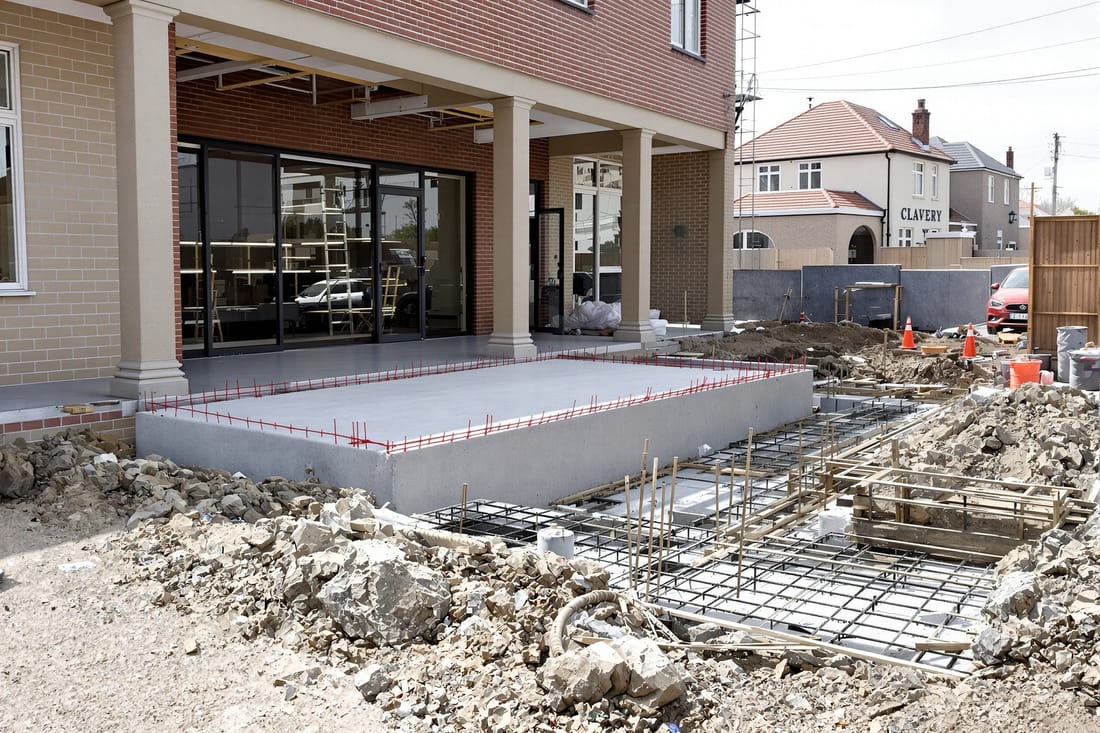
Sitework and structural concrete for Austin properties
Structural concrete is what actually carries the weight of your home, addition, or commercial building, so it has to be right the first time. At Superior Concrete Austin, our crew focuses on sitework and structural concrete that is designed for Austin clay soils, real local building conditions, and the way Central Texas weather beats up concrete over time.
When we talk about sitework, we mean the prep that happens before any concrete arrives. That includes clearing, rough grading, fine grading, temporary drainage, and setting elevations so water flows away from your structure. Structural concrete covers anything that supports real loads, like slab foundations, grade beams, piers, retaining walls that hold back soil, structural pads for equipment, and thickened slabs under load bearing walls.
In Austin, a lot of newer homes sit on post-tension or conventional slab-on-grade foundations, while older homes in central neighborhoods like Hyde Park and Crestview often have pier-and-beam systems or older slabs with limited reinforcement. We help homeowners, builders, and small commercial owners choose the structural concrete approach that fits their specific soil conditions, the age of the structure, and current building codes in Austin and Travis County.
How we handle sitework on real Austin lots
Most of the long term performance of structural concrete is decided before the first truck shows up. Our sitework process starts with a visit to your property, where we look at access for trucks, existing trees you want to keep, how neighboring lots are graded, and where water tends to stand after a storm. Austin has plenty of sloped lots and rocky pockets, especially in West Austin and around the greenbelts, so we plan excavation and grading around that reality.
We typically begin by stripping vegetation and organic topsoil in the building footprint. Organic material rots and softens, which can cause slab settlement later, so this step matters. Next we machine grade to rough elevation, then proof-roll or compact the subgrade. On many sites we add select fill or crushed limestone base to build up low areas and create a uniform, well compacted platform for structural concrete.
For tight urban infill lots or backyards with limited access, we often bring in mini excavators, skid steers, and smaller dump trucks instead of full-size equipment. This keeps fences, neighboring structures, and existing landscaping safe. We also cut temporary swales or set up basic site drainage so that if a storm hits before the concrete pour, water does not pond in the excavations.
Before formwork goes in, our crew checks elevation benchmarks against your plans and confirms clearances at property lines and easements, which is important in older Austin neighborhoods where lots can be irregular. When necessary, we coordinate with your engineer to verify that the subgrade meets their specifications before any reinforcing steel is placed.
Structural concrete foundations, beams, and walls
Structural concrete needs the right thickness, reinforcement, and connection details, not just the right mix. Superior Concrete Austin installs slab-on-grade foundations, thickened edge slabs, grade beams, drilled piers, and structural retaining walls that are engineered for local soil reports and Austin building code requirements.
For slab foundations, we start by building forms to the exact plan dimensions, then we set vapor barriers, edge insulation if specified, and steel reinforcement or post-tension cables. Reinforcement layout is based on engineered drawings and is tied, chaired, and spaced so it stays in the correct position during the pour. On many residential jobs we install thickened beams inside the slab pattern. These beams help resist soil movement that is common in expansive Central Texas clays.
On projects where more support is required, we install drilled concrete piers or belled piers below the slab. We drill to the engineer specified depth, clean out loose material, place cages, and then tremie concrete to avoid voids. Piers are then tied into grade beams and slabs to create a single structural system. This approach is common for additions, hillside builds, and areas around creeks where soil layers vary.
Structural retaining walls and tall stem walls are formed with careful bracing so they stay true during the pour. We place rebar to match the design, install weep holes and drainage rock where needed, and use higher strength concrete mixes when walls hold back significant soil or support decks and structures. Proper joint placement and water management behind the wall are critical details we pay attention to, because many Austin retaining walls fail from poor drainage, not from weak concrete.
Concrete mixes, finishes, and what affects cost
For structural work in Austin, we typically use 3000 to 4000 psi concrete mixes with controlled slump so they flow around reinforcement but do not separate. Hot summers and quick drying conditions around Austin mean we often schedule early morning pours and may adjust mix designs with retarders or water reducers so the concrete remains workable long enough to place and finish it correctly.
Customers often ask what really drives the price of sitework and structural concrete. The main factors are access to the site, the amount of excavation or fill required, the complexity of the forms, the amount and type of reinforcement, the specified concrete strength, and any engineering requirements like piers or grade beams. A simple rectangular slab on a flat, open lot will cost less per square foot than a heavily reinforced foundation on a sloped or tight lot that needs piers, retaining walls, and special shoring.
We walk you through options that can manage cost without compromising structural performance, such as adjusting slab thickness or beam layout within what your engineer allows, or planning the project in phases to match your budget. For finishes, even structural slabs can be trowel finished, broom finished, or left ready to receive flooring. In garages and workshops we can saw cut control joints in a layout that lines up with walls or future equipment pads so cracking is controlled and less visible.
If you already have engineering in hand, we price directly from those drawings. If you do not, we can connect you with local structural engineers who are familiar with Austin soils and permitting. Working as a team early in the process often saves redesign time and helps avoid change orders once construction starts.
What Austin property owners should know before hiring
Sitework and structural concrete are not services you want to award based on the lowest number alone. Before you hire any contractor in Austin, confirm that they understand local soil expansion issues, have experience with both residential and light commercial work, and are willing to follow a structural engineer's plans without shortcuts. Superior Concrete Austin provides detailed estimates that spell out excavation depth, base materials, reinforcement type and spacing, slab thickness, and concrete strength so you know exactly what you are getting.
Permitting and inspections can vary between the City of Austin and nearby jurisdictions like Pflugerville, Cedar Park, and Round Rock. For projects that require permits, we coordinate with your builder or designer so inspections are requested at the correct stages, typically after forms and steel are in place but before the pour. We welcome inspector and engineer walkthroughs, because catching issues at this stage is far cheaper than repairing a problem after concrete has hardened.
We also talk honestly about common issues. In our region, even a well designed slab can develop minor hairline surface cracks as it cures or as soils move seasonally. Our goal is to limit cracking through proper jointing, reinforcement, and curing, and to make sure any cracks that do appear are non-structural. For retaining walls, we emphasize drain systems and backfill practices because that is where many DIY projects fall short.
If you are planning a new build, addition, or structural retaining wall in Austin, it helps to involve a concrete contractor while plans are still flexible. We can suggest layout tweaks that simplify formwork, reduce unnecessary steps, and make access for ready mix trucks easier, all of which can lower your overall project cost without weakening the structure.