Home › Commercial Concrete Repair and Restoration
Protect your customers and operations with commercial concrete repair in Austin, TX. We restore damaged slabs, sidewalks, and loading areas by fixing spalls, joints, and trip hazards. Our repair methods minimize downtime and help extend the life of your existing concrete surfaces.
Superior Concrete Austin provides professional commercial concrete repair throughout Austin, TX, Texas and the surrounding area. Our licensed, insured crew delivers safe, clean, on-time work with a free estimate before anything begins. Call (737) 258-3740 or request your free quote.
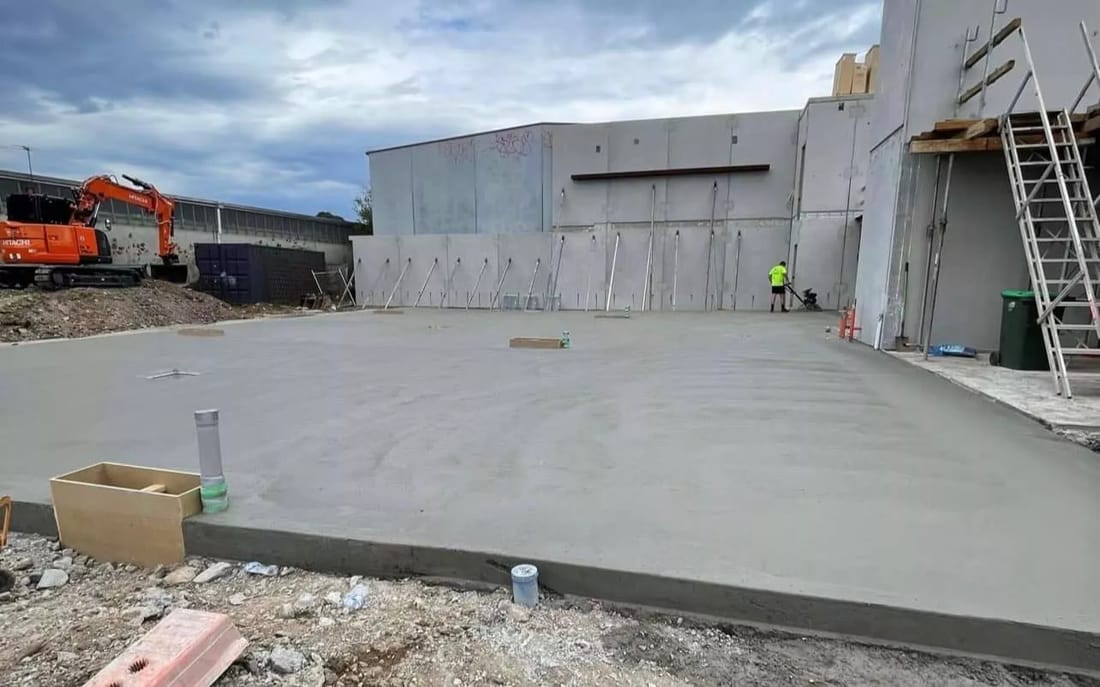
Commercial Concrete Repair for Austin Properties
When concrete starts cracking, spalling, or settling around your building, it is not just an eyesore. It can create safety hazards, invite moisture into your structure, and violate ADA or city codes. Superior Concrete Austin focuses on commercial concrete repair and restoration in Austin, TX, so we look at each project with durability, code compliance, and everyday use in mind.
From warehouse floors in North Austin and office parking lots near the Domain, to restaurant patios on South Congress and loading docks in industrial parks, each property has different traffic patterns and exposure to heat, water, and chemicals. Before we suggest any repair method, we look at how your concrete is actually used. Heavy forklift routes, trash truck paths, food and grease exposure, irrigation overspray, or tree roots will all affect what type of repair will last.
Our commercial customers usually call us for issues like trip hazards at sidewalks, broken curbs, failing wheelchair ramps, ponding water near entrances, or deteriorating dock aprons. We do a site visit, walk the concrete with you, and identify which areas are safety priorities and which can be phased later if you are working with a set budget. You get straightforward recommendations in plain language, with options that fit how your Austin property really operates, not just what looks best on paper.
How We Diagnose Concrete Problems on Your Site
Good commercial concrete repair starts with figuring out why the concrete failed in the first place. If you only patch what you see, the same issue comes back. Superior Concrete Austin uses a simple but thorough process that fits Austin conditions, from clay soils to heavy sun and sudden storms.
First, we document visible damage. This includes mapping out cracks, spalls, settled panels, rust stains from rebar, or surface scaling. For parking lots and drives, we also mark rutting and areas where water collects after rain. We often schedule site visits early in the morning or after a storm so we can actually see drainage issues instead of guessing.
Second, we look at movement and load. We check for soil settlement along building edges, down-cutting from truck turning paths, and recurring tire tracks from delivery routes. If tree roots are involved, we look at where roots are likely to grow next and discuss with you any coordination with a tree service, especially near protected trees in Austin.
Third, we evaluate the subgrade and joints where we can. In some cases we drill small test holes or expose an edge to see if the base rock is thin, poorly compacted, or washed out by irrigation leaks. We also check joint sealant, dowels, and rebar exposure. Rusting reinforcement in older Central Texas slabs is common, especially where de-icing salts or kitchen washdown areas have been used.
Finally, we match the problem to the right repair level. Some issues are suited for concrete resurfacing or structural patching. Others call for slab lifting (slabjacking), partial-depth replacement, or full panel replacement. You get a clear explanation of which approach is appropriate for each section of your property and why, along with the impact on business access and schedule.
Repair & Restoration Methods We Use
Commercial concrete repair is not one single method. Superior Concrete Austin draws from several techniques and materials depending on your site, budget, and downtime limits.
Crack repair and joint work: For working cracks and failed joints in parking lots and warehouse slabs, we clean, route (widen to a controlled profile), then fill with semi-rigid epoxy or polyurea. This protects the slab edges from impact and keeps water out of the base. Hairline surface cracks that are not moving can often be bridged with a polymer-modified overlay during resurfacing.
Spall and edge repair: Where rebar is exposed or corners are broken off at dock edges, stairs, or curbs, we chip back to sound concrete, clean and treat the steel, then rebuild the area with high strength repair mortar or concrete. On dock levelers and forklift routes we often use fast setting, high early strength materials so you can get back to service in hours rather than days.
Slab lifting and settlement correction: In areas of localized settlement, such as sidewalks around multifamily complexes or panels at storefront entries, we can often lift the slab with pressure grouting or foam injection instead of full replacement. This cuts downtime and avoids disturbing landscaping and adjacent improvements. We pay close attention to how Austin’s expansive soils move seasonally and advise you where lifting makes sense and where the soil conditions argue for replacement instead.
Surface restoration and overlays: For worn, pitted, or stained slabs that are structurally sound, we may recommend a resurfacing system. This can be a thin bonded overlay or a thicker topping, often polymer modified for better adhesion and durability. On restaurant patios and entry plazas we can add texture for slip resistance and integrate joint layouts that match your existing architecture.
Full-depth removal and replacement: When the base has failed, the steel is badly corroded, or the slab was never built for the loads you now have, full-depth replacement is usually the smart option. We sawcut, remove, and haul off the old concrete, rework and compact the base, upgrade reinforcement and thickness where needed, and pour new air entrained or standard concrete tailored to your use. This is common for trash enclosure pads, heavy truck routes, and aging drive lanes in older Austin retail centers.
What Drives Cost, Schedule, and Long Term Performance
Commercial concrete repair costs in Austin, TX are driven far more by access, thickness, and use than by square footage alone. Superior Concrete Austin walks you through these factors so you can plan realistically and avoid surprises.
Access and phasing: Working in a busy shopping center, hospital, or office park means we often phase the work. Night or weekend pours, barricades, temporary ramps, and traffic control can influence cost. Tight downtown sites or parking garages may require small equipment and hand removal instead of large breakers, which also affects pricing and schedule.
Thickness, reinforcement, and base work: The thickness of existing concrete and how much base repair is needed are major cost drivers. A 4 inch sidewalk panel with good base is a very different project than an 8 inch truck lane over soft, saturated soil. During estimating, we consider whether we can tie into existing steel, reuse base rock after recompaction, or if a full rebuild is needed.
Material choices: Fast setting repair mortars and high performance overlays cost more per bag than standard concrete, but can save you money in reduced downtime. For warehouses that run multiple shifts or for restaurant patios where you cannot be closed for long, we will price both standard and fast track options so you can see the tradeoff between material cost and lost business.
Austin climate and maintenance: Our heat, occasional ice events, and intense sun harden and shrink concrete, then add UV exposure and expansion. We account for this with joint layouts, mix design, and curing practices like wet curing or curing compounds. After the work is complete, we explain simple maintenance steps such as sealing joints on a schedule, redirecting irrigation away from slab edges, and watching for early signs of movement so small issues do not turn into major structural repairs.
Why Work With a Local Commercial Concrete Repair Team
Commercial properties in Austin, TX face specific conditions that national vendors and out of town crews often underestimate. Superior Concrete Austin is based here, so we are familiar with local soils, city and county standards, and typical traffic patterns at area businesses.
We understand how Austin’s expansive clay soils affect slabs near building perimeters, where poor drainage can cause seasonal heave and settlement. We are familiar with City of Austin sidewalk, curb ramp, and ADA requirements, so when you repair or replace those areas you stay aligned with local inspection expectations. For multifamily and commercial sites that may face tenant slip and fall claims, we pay particular attention to slopes, surface texture, and transitions at door thresholds.
Communication is direct and practical. We meet you on site, mark repair limits with you, discuss staging areas, and coordinate with your property managers or tenants so people can still get in and out safely. For active businesses, we often schedule noisy demolition for early morning or off hours and use clear signage and barricades to keep customers away from wet concrete and cure areas.
Most important, you get repair strategies that reflect how Austin properties actually age. That might mean extra attention to shade side algae growth on north facing walkways, stronger mixes at trash corrals and grease areas at restaurants, or overlay systems that hold up under patio heaters and frequent furniture movement. The goal is not just to patch what failed, but to leave you with commercial concrete that fits your business, your site, and our Central Texas environment.