Home › Concrete Slab Installation
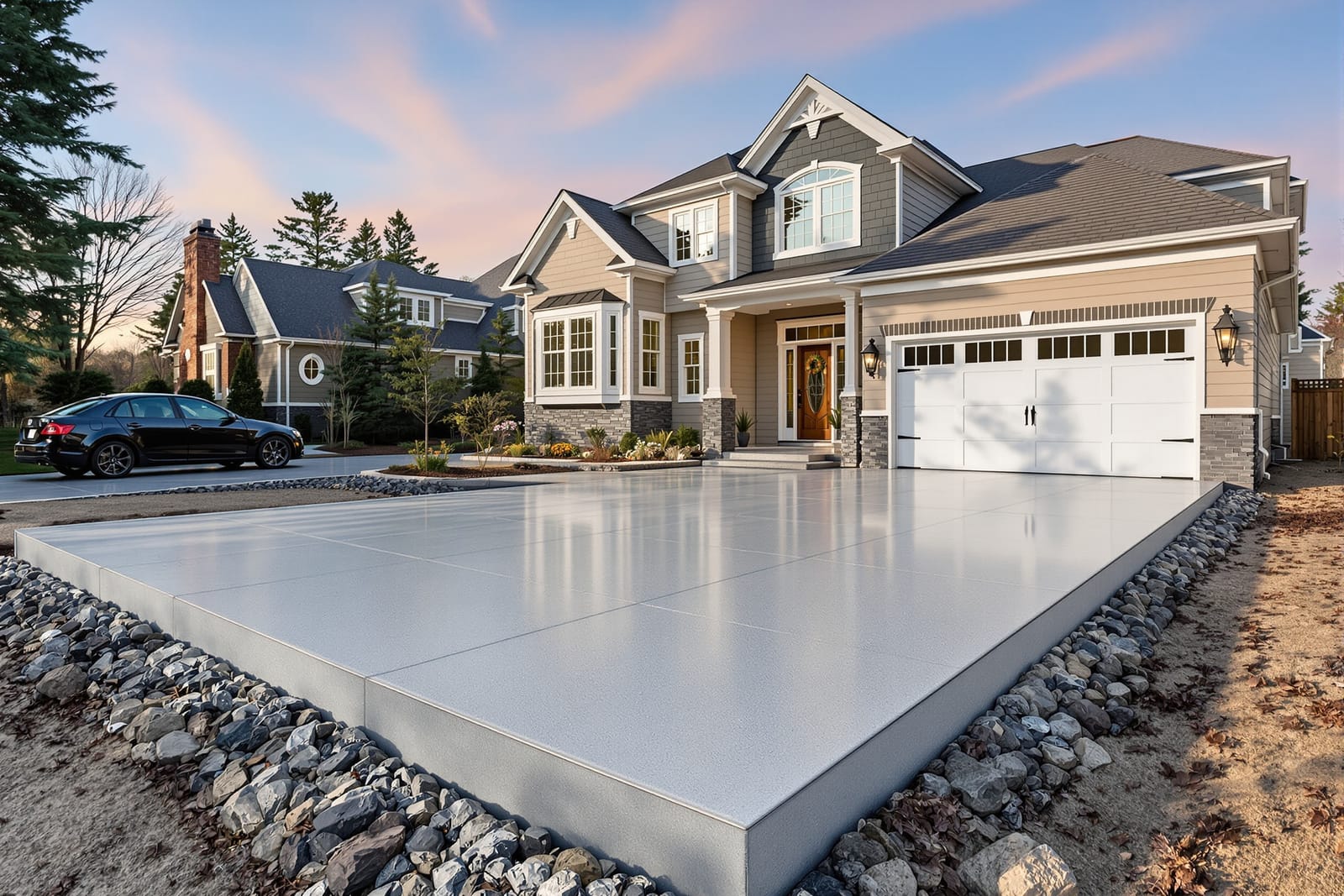
Get a level, durable concrete slab in Austin, TX that is ready for your next project. We pour concrete slabs for sheds, garages, homes, patios, and additions with proper base prep and reinforcement. Our team focuses on accurate elevations and smooth finishes so your new slab performs for years.
Superior Concrete Austin provides professional concrete slab throughout Austin, TX, Texas and the surrounding area. Our licensed, insured crew delivers safe, clean, on-time work with a free estimate before anything begins. Call (737) 258-3740 or request your free quote.
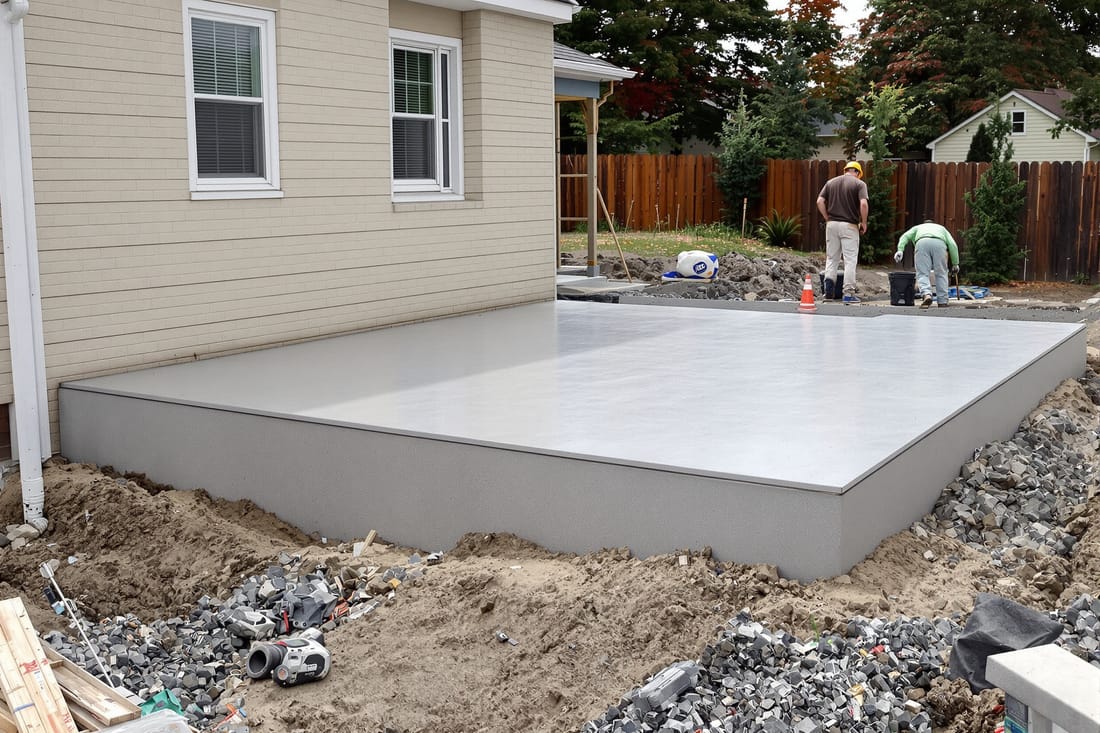
Concrete slab installation in Austin that holds up to Hill Country soil and heat
Superior Concrete Austin installs concrete slabs that are designed specifically for Central Texas conditions, not a generic one-size-fits-all pour. A good slab in Austin has to deal with clay soils that shrink and swell, long stretches of 100-degree days, and the occasional heavy storm. If the slab is not planned around those realities, it cracks, heaves, or tilts.
When we look at your project, we start by asking what the slab will support. A small backyard shed, a driveway extension, a work shop, or a new room addition all need different slab thicknesses, reinforcement patterns, and edge details. We match the slab design to the load, the soil, and where it sits on your property.
We also pay attention to city and county requirements within the Austin area. Some slabs for additions or garages must meet specific code for thickness, footing depth, and vapor barriers. We handle those details so you end up with a slab that not only performs but also passes inspection without surprises.
How Superior Concrete Austin installs a concrete slab, step by step
Concrete slab installation is more than just showing up with a truck and pouring. Done correctly, it is a sequence of steps that all affect how long your slab will last.
Layout and excavation: We mark the slab footprint on your property using measurements tied to existing structures or property lines. Then we excavate to the required depth, typically removing topsoil and any organic material that could decay and cause settlement. For many Austin properties with shallow clay, this may be 4 to 8 inches below finished grade, deeper where code calls for thickened edges or grade beams.
Soil preparation and base: Once the rough grade is set, we compact the subgrade to limit future movement. On many Austin sites we add a base layer of crushed limestone or road base. This creates a more stable platform and improves drainage under the slab. We compact in thin lifts with a plate compactor or roller until we reach the density we need.
Forming: We build forms with straight lumber or steel forms, set to the finished slab elevation and slope. For patios and driveways, we include a slight slope away from structures so water drains correctly during thunderstorms. We secure the forms with stakes so they do not shift when the concrete is placed.
Reinforcement: We install rebar or wire mesh according to the slab design. For typical residential slabs in Austin, we often use a grid of #3 or #4 rebar on chairs so the steel stays in the middle of the slab, not at the bottom where it does little to resist cracking. For heavier loads, like RV pads or workshops, we may tighten the grid spacing or use thicker bar.
Pouring, finishing, and curing: We order the proper concrete mix, pour it into the forms, and use vibrators or hand tools to work it around reinforcement and into corners. After screeding the surface, we float and trowel or broom finish it, depending on the use. Before the crew leaves, we cut control joints at precise spacings to manage shrinkage cracks. We then cure the slab by spraying a curing compound or by keeping it damp. This curing step is often skipped by cheap installers, but in Austin heat it is critical to reduce early cracking and increase strength.
Concrete mix, thickness, and reinforcement options for your slab
Choosing the right concrete slab details is where you can build in performance without overspending. Superior Concrete Austin helps you understand what actually matters.
Concrete strength and mix: For most residential slabs in Austin, a 3,000 to 3,500 psi mix performs well. For garage slabs, RV pads, or shop floors with vehicle lifts, we often recommend 4,000 psi or higher. In hot months, we typically request set-retarding admixtures or lower water content to keep the mix workable during transport through Austin traffic.
Thickness: A basic patio or small shed slab is often 4 inches thick, but thickness should reflect use and soil. Driveways or parking pads often need 5 inches or more, and high-load areas may need thickened edges or grade beams. We explain where added thickness actually improves performance versus where it is just unnecessary cost.
Reinforcement choices: Rebar, wire mesh, and in some cases fiber-reinforced mixes all have their place. For a typical backyard patio, fiber reinforcement with control joints may be sufficient. For anything that will support vehicles or structural loads, we lean on rebar in a grid, tied and supported on chairs. We walk you through rebar spacing, bar size, and why those choices matter for long-term crack control.
Vapor barriers and moisture control: For interior slabs or future living spaces, a poly vapor barrier under the slab helps control moisture and protect flooring like wood or laminate. For exterior slabs, we focus more on subgrade drainage and proper slope so water does not sit under or on top of the concrete.
What affects concrete slab cost in Austin (and where you can save)
Concrete slab pricing is driven by a mix of site conditions, design choices, and schedule. We break these factors down clearly so you understand where your money is going.
Access and site prep: Easy access for a ready-mix truck on a flat lot in South Austin costs less than a tight backyard in central Austin that requires pumping or wheelbarrowing. If we have to remove trees, old concrete, or excess soil, that adds to the scope. Knowing this up front helps you compare quotes fairly.
Thickness and reinforcement: More thickness and more steel means more cost. However, cutting corners here can be the difference between a slab that lasts decades and one that fails in a few years. We help you avoid overbuilding in low-stress areas and underbuilding where loads or soil movement are real issues.
Concrete market conditions: Concrete prices in Austin move with fuel costs, cement supply, and overall construction demand. We keep you updated on current pricing and sometimes suggest scheduling larger pours together so you get better value per square foot.
Finish type and details: A basic broom finish slab for a driveway extension is usually less expensive than a smooth troweled shop floor or a decorative finish. Adding steps, thickened edges, or embedded anchors for structures also adds labor and material. We itemize these options so you can decide which details are worth it for your project.
Timing: Summer afternoons in Austin can be too hot for quality finishing on larger slabs, so we often pour early in the morning. In some shoulder seasons, we can be more flexible with timing, which can reduce overtime or special measures and keep your cost in check.
Local challenges we address with every Austin concrete slab
Austin presents very specific challenges for concrete slab installation. Superior Concrete Austin builds those realities into every job.
Expansive clay soils: Many neighborhoods from Pflugerville down to South Austin have clay that shrinks in dry spells and swells when it finally rains. That movement can tilt slabs and crack edges. To reduce this risk, we pay close attention to subgrade compaction, base materials, slab thickness at the perimeter, and drainage away from the edges.
Heat and rapid drying: In the summer, concrete can lose moisture too quickly, which weakens the surface and causes random cracking. We adjust mix designs, pour times, and curing methods so your slab gains strength without the surface dusting or curling that shows up when concrete is rushed.
Rain events: Austin can go from dry to stormy in a single afternoon. We monitor the forecast and will not place a slab when rain is likely to hit fresh concrete. If a sudden storm does form, we protect the surface and edges as much as possible so they are not washed out or pitted.
Existing structures and drainage: Many slab projects tie into existing patios, driveways, or foundations. We match elevations and slopes so water drains where it should and does not end up against your house or pooling at low spots. On sloped lots, common in West Austin, we sometimes recommend small retaining, step-down slabs, or additional drainage solutions so the new slab functions correctly long-term.
What to know before you schedule your concrete slab installation
Before you book a concrete slab with Superior Concrete Austin, it helps to think through a few practical points.
Intended use and future plans: Tell us not only what you need now, but what you might do later. For example, if you may enclose a patio in the future, we can plan for adequate thickness, vapor barrier, and elevations that match interior floors. If a simple parking pad might later hold an RV or heavy trailer, we can upgrade design now at a much lower cost than retrofitting later.
Access and utilities: Let us know about underground utilities, irrigation lines, or septic systems near the slab area. We can help with utility location and design the slab so it does not interfere with critical lines. Clearing the path for equipment and concrete trucks before the installation date also keeps the project on schedule.
Permits and HOA rules: Within Austin city limits and some surrounding jurisdictions, certain slabs require permits. HOAs may have rules on location, appearance, or drainage. We help you understand what applies and provide the documentation needed for your application when required.
Scheduling and weather: In our area, late fall and early spring can be good times for slab installation because temperatures are moderate. In summer, we often book morning pours to keep quality high. If weather forces a reschedule, we coordinate quickly so your project does not stall.
If you are planning a new concrete slab in Austin, TX, Texas, we are ready to walk the site, discuss options in detail, and give you a clear, itemized plan before work begins.