Home › Site Concrete and Civil Works
Simplify your project with turnkey site concrete in ATX, TX. We install aprons, generator pads, dumpster pads, and other civil concrete elements around commercial and industrial sites. Coordinate flatwork, access, and utility structures with one experienced concrete team.
Superior Concrete ATX provides professional site concrete throughout ATX, TX, Texas and the surrounding area. Our licensed, insured crew delivers safe, clean, on-time work with a free estimate before anything begins. Call (737) 258-3740 or request your free quote.
Site concrete tailored to Austin properties
Site concrete and civil works is the backbone of how traffic, drainage, and structures function on your property. At Superior Concrete ATX, we treat it as a full system, not just a slab or a driveway. When we visit your Austin site, we start by walking the whole property with you, noting elevations, existing structures, tree locations, utility connections, and where water naturally wants to flow. This first look prevents issues like ponding water around foundations, trip hazards at transitions, or driveways that scrape low vehicles.
We focus on how you will actually use the space. For commercial sites, that means thinking about truck turning radiuses, dumpster pad loading, ADA compliant slopes, and where pedestrians cross drive lanes. For residential projects, it might be how you pull into the garage, where kids play, or how guests walk to the front door during a storm. By asking these questions up front, we shape the site concrete layout, thicknesses, and reinforcement choices so your paved areas work smoothly for daily use, not just on a plan sheet.
Austin’s hilly terrain and mixed soils make site concrete planning more complex than many areas of Texas. We routinely deal with cut and fill conditions, shallow limestone, and clay pockets that move when saturated. Our team factors these local realities into slab design, joint spacing, and drainage planning so your concrete performs over time, not just at final inspection.
How we plan and engineer your site concrete and civil works
A solid site concrete project in ATX starts with a clear plan. If you already have civil drawings, we review them for constructability and local practicality, such as verifying that proposed slopes actually work with neighboring properties and existing street elevations. If you do not have drawings yet, Superior Concrete ATX can collaborate with your engineer or recommend one to produce grading, drainage, and paving plans that match your budget and permit needs.
We check key engineering details before breaking ground: slab and pavement thickness based on expected traffic, reinforcement type and spacing, base material specs, and required concrete strength. For example, a trash enclosure slab that sees heavy front loaders may need thicker concrete and more steel than a standard parking stall. Sidewalks along public streets must match City of Austin standards, including width, slope, and detectable warning panels where required.
Drainage is a major focus in our planning. We calculate slopes so water moves away from structures and toward approved discharge points, usually tie-ins to existing storm drains, drainage swales, or curb inlets. On many Austin lots, especially infill projects, there is very little room for error. We use laser levels and grade stakes to lock in elevations so that finished concrete matches the intent on the plans and passes both city and third party inspections without rework.
Excavation, base preparation, and formwork the right way for ATX soils
Most long lasting site concrete success is determined before a single yard of concrete is poured. Our crews start with precise excavation, cutting to subgrade in controlled lifts instead of over digging and backfilling loosely. In Austin, we frequently encounter caliche, fractured limestone, and expansive clay. We compact subgrade per specifications, then place a flexible base like crushed limestone or flex base to achieve uniform support and help distribute loads.
For driveways, fire lanes, and heavy duty pavements, we pay close attention to base thickness and compaction testing. Poor base preparation is one of the top reasons concrete cracks prematurely or settles. Where plans call for geogrid or moisture barriers, we install them cleanly and continuous so they actually function, rather than leaving gaps that become weak spots. If we encounter soft pockets or underground obstructions, we address them immediately instead of just pouring over the problem.
Formwork is where the final look and drainage performance are set. Superior Concrete ATX sets forms to both line and grade, constantly checking with laser levels. Expansion joints at building interfaces, score joints that control cracking, curb radiuses, and thickness transitions are laid out before steel goes in. In areas likely to see tree root growth, such as near mature oaks common in ATX neighborhoods, we discuss root barriers or layout adjustments so roots do not heave your new concrete in a few years.
Concrete placement, reinforcement, and finishes that fit local use
Concrete mix design in Central Texas is not one size fits all. We typically use 3,000 to 4,000 psi mixes for general flatwork, with higher strengths where specified by engineers. In Austin’s heat, especially from late spring through early fall, we schedule pours early in the morning when possible. Cooler temperatures give us better workability, a more controlled finish, and reduce the risk of plastic shrinkage cracking caused by sun and wind.
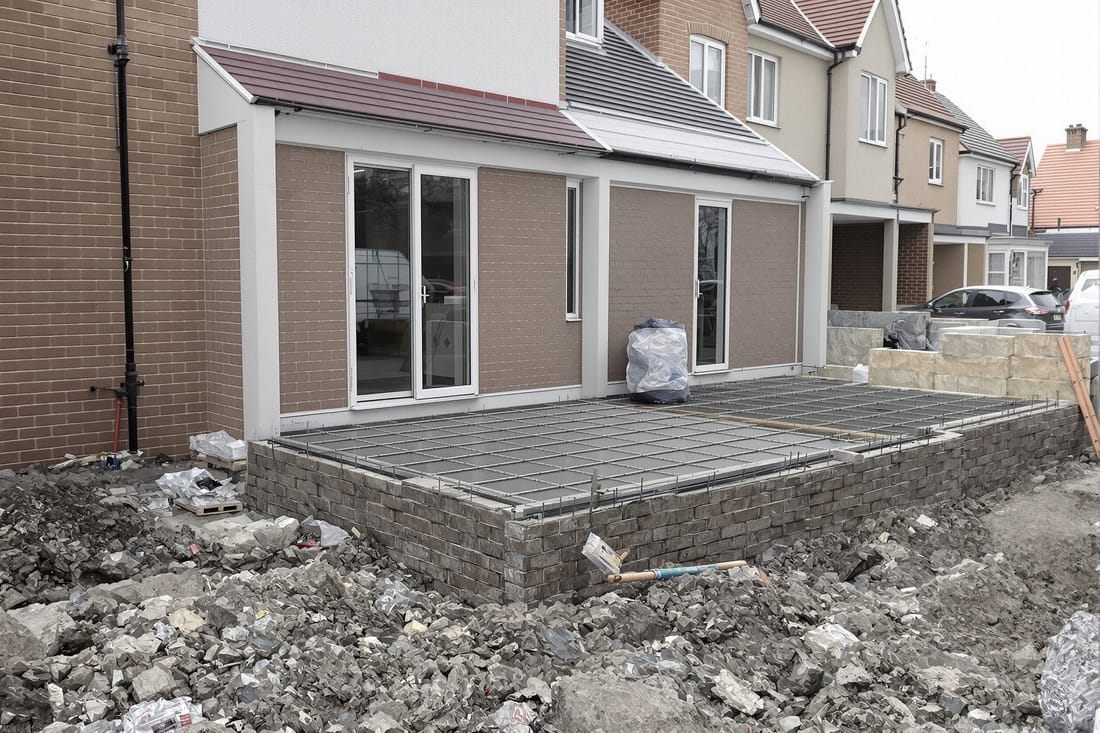
Before the trucks arrive, we place reinforcement per plan, whether that is rebar grids, doweled joints, or welded wire mesh. In heavier duty pavements and commercial aprons, we often recommend upgrading to continuous rebar patterns for better long term performance. Our crews tie steel securely and support it on proper chairs so it stays at the correct depth when concrete is placed.
During the pour, we consolidate concrete around reinforcement and edges, then strike off and float to establish flat, consistent surfaces. Finishes depend on use: broom for sidewalks and driveways to provide traction, light broom with edge troweling for patios, and troweled or slightly roughened finishes for ramps and steps to meet slip resistance standards. On commercial sites, we also install wheel stops, bollard sleeves, and embedded sleeves or anchors as needed during the concrete phase so you are not drilling and patching new concrete later.
Common site concrete issues and how we prevent them
Austin properties often face recurring site concrete problems: water pooling along foundations, sidewalks heaving near trees, cracked curbs at delivery entrances, and misaligned ADA ramps that fail inspection. Superior Concrete ATX addresses these risks in design and installation instead of waiting for them to show up years later.
For drainage, we carefully control slopes and use surface drains or channel drains where flat conditions or tight clearances make simple grading impossible. In older neighborhoods with limited storm infrastructure, we sometimes recommend small regrading changes or added swales to move water without creating issues for neighbors. Where code requires, we verify that cross slopes on sidewalks and ramps are within limits so wheelchairs and strollers move safely and inspections pass the first time.
Cracking is another concern. All concrete will crack to some degree, but intelligent joint design helps control where and how it cracks. We space control joints based on slab thickness and geometry, adjust layout around corners and re-entrant areas, and use dowels where loads cross joints. We also talk openly about what is considered normal hairline cracking versus what might signal a deeper issue such as soil movement or poor drainage. If you are dealing with an existing failed section of site concrete, we can often investigate and explain why it failed before recommending a repair or replacement strategy that will last longer than the original.
Timing, cost drivers, and why to work with Superior Concrete ATX
Timing site concrete and civil works in Austin matters. The milder months from October through April generally offer the best balance of workable weather and scheduling flexibility. Summer heat is manageable with the right mix designs, curing practices, and early start times, but very wet periods can delay excavation and base work. When we bid your project, we include realistic schedule expectations based on the season and site access.
Cost for site concrete is driven by more than just square footage. Key factors include excavation depth, need for haul off, base type and thickness, reinforcement level, concrete thickness, site access for trucks, and required drainage structures like inlets and flumes. For example, a long driveway on a narrow hillside lot in West Austin may require more labor, forming, and haul off than a same size driveway on a flat lot in East Austin. City permitting, inspections, and traffic control on public frontages can also influence both price and schedule.
Superior Concrete ATX focuses on giving you a clear scope and line item pricing so you understand where your investment is going. We walk you through alternatives if there are options, such as standard broom finish versus decorative borders, or thicker pavement where you anticipate heavier vehicles. Our goal is to leave you with site concrete and civil works that feel seamless with your property, meet local codes and inspection requirements, and support your daily use for many years without surprise repairs.